Summary
• Outdoor gyms play a vital role in improving public health and tackling regional health inequalities by providing free, accessible exercise opportunities for all.
• Local communities benefit socially and economically, with outdoor fitness spaces supporting NHS goals, reducing lifestyle-related diseases and boosting overall wellbeing.
• Different groups gain unique advantages: women can combine strength and cardio training, men enjoy pressure-free social exercise, young people gain confidence and mental health support, and older adults improve mobility, heart health and reduce loneliness.
• Outdoor gyms strengthen community cohesion, encouraging people of all ages to stay active, connect with others and enjoy the mental and physical benefits of exercising outdoors.
8th December 2025
It’s no exaggeration to say that outdoor gyms play a unique role in bringing people together while enhancing public health across the UK.
Since 2012, community public health teams have come under the jurisdiction of local authorities rather than the NHS, something that was reinforced in the 2022 Levelling Up whitepaper.
But disparities remain in terms of regional health inequalities across the UK, with, on average, the most deprived areas across England, Scotland and Wales having lower life expectancy than the least deprived ones, according to The Health Foundation.
Equally, deprived areas are likelier to have lower healthy life expectancy, says the same organisation, with an average 19-year gap in healthy life expectancy between the most and least deprived regions. Scotland was found to have the biggest gaps in terms of both healthy and overall life expectancy across its most and least deprived areas, followed by England and then Wales.
Meanwhile, for boys born in the UK between 2016 and 2018, the gap between areas with the highest and lowest healthy life expectancies is 18.6 years.
At Fresh Air Fitness, we’ve previously written about how outdoor gyms can enhance public health to help turn around these inequalities, including with local leadership, whole-council strategies, an emphasis on key partnerships and working across entire communities.
We’ve also written separately about the social value of exercise and its benefits to the NHS including lower rates of obesity, diabetes, heart disease and stroke. Outdoor gyms provide no-charge, accessible fitness options which enhance physical and mental wellbeing, support patients’ recovery and encourage community engagement.
Outdoor gyms can benefit everyone
Outdoor amenities offer advantages to everyone in a community across all demographics, so that everyone feels the benefit. Here’s how:
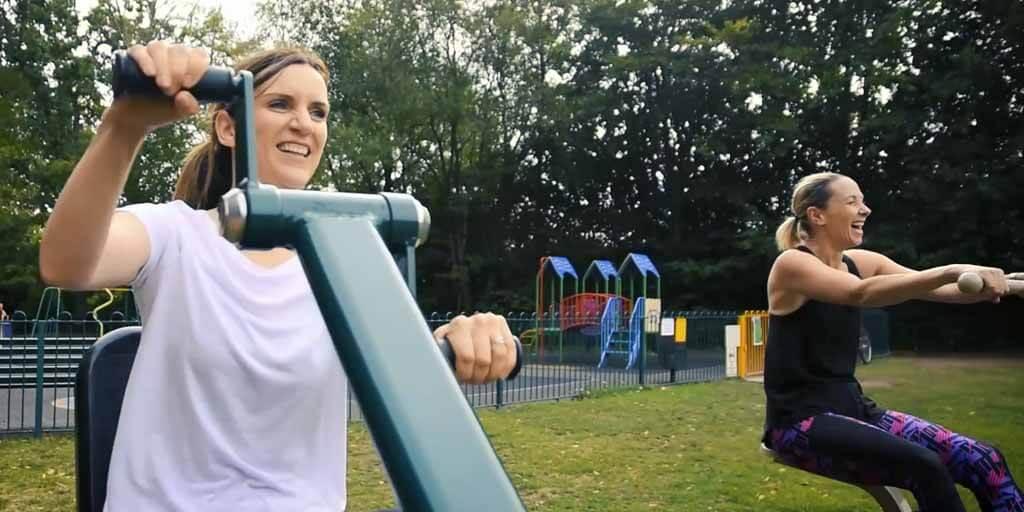
1.) Women appreciate being able to work out at a time to suit them and the opportunity to complete both cardio and strength training. In middle age, particularly, women benefit from strength training to counteract age-related muscle loss, maintain bone density and lessen the risk of chronic diseases.
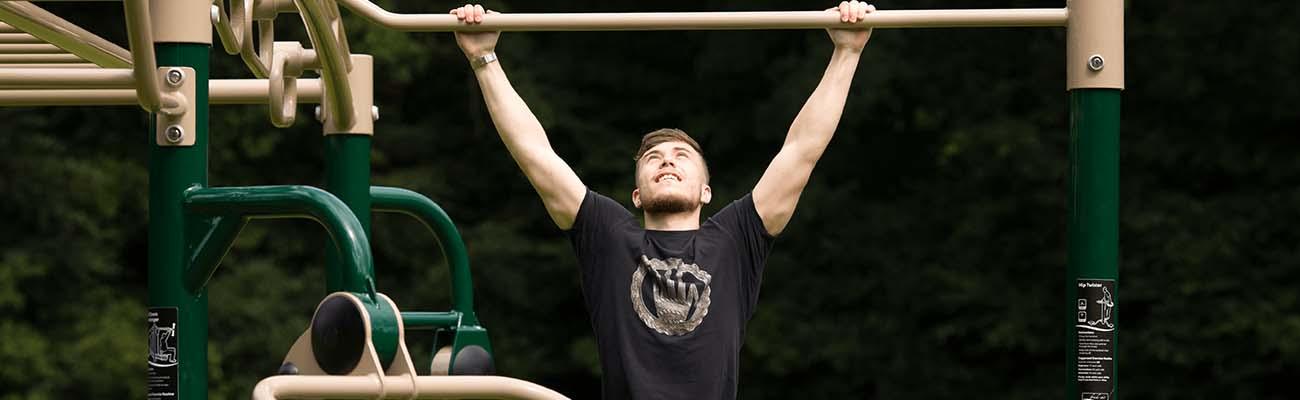
2.) Men often enjoy having a place to socialise with each other without some of the attendant pressure that can apply to indoor gyms, and this can boost self-esteem and mental health while reducing stress. Outdoor gyms provide the opportunity for functional movement—pull-ups, dips, push-ups, squats and balance work—which help to build strength, mobility, and endurance.
3.) Teens and young adults have a fitness facility they can use for free at any time – again there are advantages for confidence and self-esteem given how many of our young people are experiencing issues with their mental health. Equally, exercise serves as a stress buster and we’ve posted before about the importance of working out at exam time to counteract stress.
4.) Older people can dramatically improve their quality of life during their later years and develop strength, balance, coordination and better heart health while enjoying the social aspects of a community workout, which can do a great deal to reduce loneliness. (According to Age UK, more than 2 million people in England aged over 75 live alone, while more than a million older people say they go over a month without speaking to a friend, neighbour or family member.)
At the same time, older people who may have stopped driving can increase the benefits of exercising at an outdoor gym by walking there. After all, you’re bound to have an outdoor gym near you, so getting there on foot should be perfectly possible. Indeed, a recently published Harvard study found that for those in their sixties or older, walking just 4,000 steps a day on one or two days a week was linked to a significantly lower risk of early death and cardiovascular disease compare to not achieving this number on any day. Findings were published in the British Journal of Sports Medicine.
Fresh Air Fitness makes award-winning outdoor gym equipment for everyone in a community, across all age groups. Get in touch if you feel your school, residential home, park or similar setting would benefit from our expertise. We’re with clients from start to finish, and will gladly have a no-obligation initial discussion.
Back to all blog posts