23rd February 2026
‘Alarming’ new research published in the Guardian last month found that nearly a quarter of the UK’s family doctors have seen children aged four or even younger who are already obese. At the same time, almost 50% of GPs have patients aged up to seven with signs of the same condition, while a handful of overweight patients had yet to reach their first birthday.
At the same time, four in five of these medics said they found it hard to broach the subject of being overweight with parents during appointments, in case doing so made them feel uncomfortable. Equally, almost two thirds (65%) struggled to talk to young people themselves about this issue, with just one in five reporting that doing so was easy.
The research, carried out by medical organisation MDDUS, spoke to 540 GPs about their experiences of weight management, the huge increase in the use of weight-loss jabs in recent years and the problems for the NHS of people being dangerously overweight.
MDDUS told journalists that the findings confirmed “the growing crisis of childhood obesity across the UK”. Meanwhile, the Obesity Health Alliance warned: “we’re letting children down before they even start school”. The organisation is calling for food and drink products to be made healthier, tighter marketing restrictions on items high in fat, salt and sugar, plus improved support for families.
GPs warned of the risks of ordering weight-loss drugs from private pharmacies. These are potentially severe for those with eating disorders or who are already on other medications. Two-thirds of GPs reported having seen patients who had ordered GLP-1 weight-loss medication despite not meeting the strict NHS eligibility criteria.
The overwhelming majority of family doctors stated that obesity would be a defining public health challenge throughout their working lives, and that it would have a significant impact on the NHS’s ability to provide care.
GPs have previously spoken out on the issue of childhood obesity, and suggested that they should go into schools to warn children of the risks of fast food.
The government insisted it was taking ‘decisive action’ on childhood obesity with a 10-year plan including limitations on TV and online junk food advertising and giving local councils more power to stop fast-food outlets from setting up outside schools.
Some two years ago, the largest study of its kind revealed that one in four kids aged 10 and 11 is obese across England, due in no small part to ultra-processed foods and unhealthy diets.
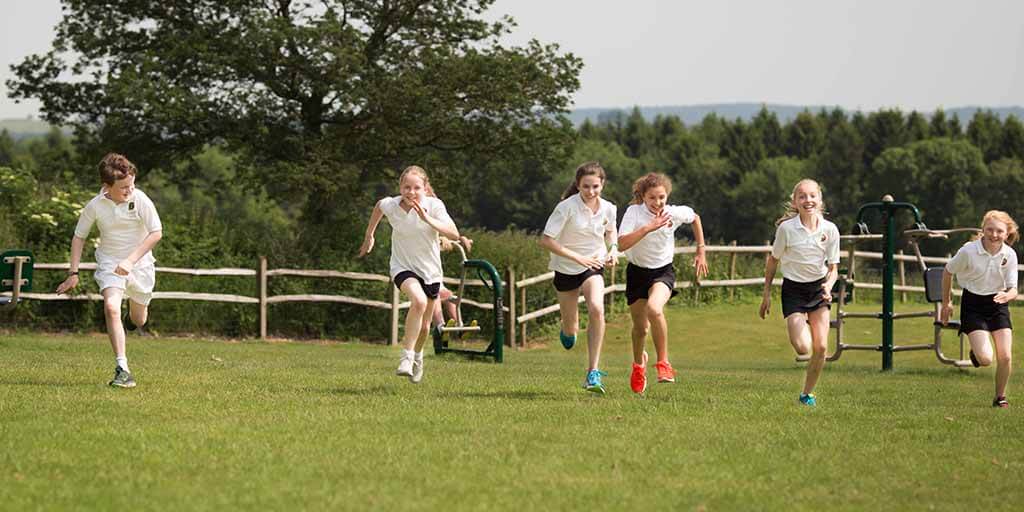
Clearly, exercise helps. According to government guidelines, children aged between five and 18 should complete at least an hour of daily moderate-to-vigorous exercise, spread throughout the week. On at least three days a week, they should incorporate activities to develop bone and muscle strength, such as running, jumping, football, gymnastics or martial arts. At the same time, youngsters should minimise the time they spend sitting down and break up long periods of inactivity.
Ideally, children would enjoy exercise and see it as an integral part of their daily lives.
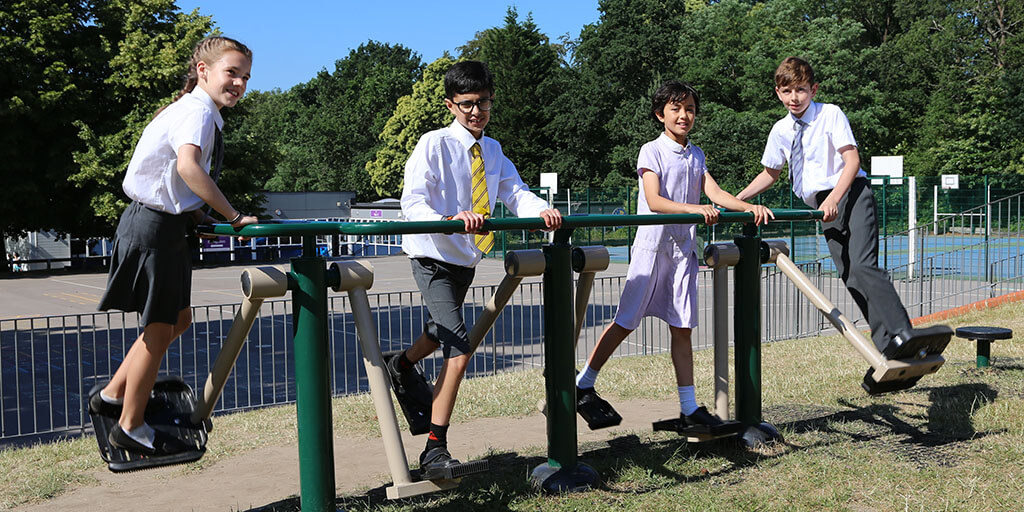
Fresh Air Fitness is an award-winning provider of outdoor gyms UK-wide and our range of children’s gym equipment is specifically designed for primary school age. Kids who use our outdoor equipment enjoy a number of benefits including muscular and cardiovascular strength, balance, agility, coordination and more. Activities can be competitive but certainly don’t have to be, while the pieces also encourage communication and any child can use them, however fit or otherwise they may be, plus SEN pupils invariably benefit hugely.
What’s more, by introducing young people to adult-style workouts, you allow them to develop physical confidence and encourage them to acquire healthy habits for life.
Fresh Air Fitness pioneered outdoor gyms in the UK and is still going strong almost two decades after first starting out. We’ll be with you from manufacture through to installation and beyond, with equipment installed by our specialist, expert team up and down the country.
Browse our extensive range of outdoor exercise equipment and get in touch to discuss fitting an outdoor gym in your community, whether you’re a school, housing association, local council responsible for a park or recreation ground or anyone else.