Summary
• Secondary school PE hours in England are in significant decline, with nearly 45,000 hours lost since 2012
• Almost 4,000 PE hours disappeared from state secondary schools in just one year
• PE teacher numbers have fallen by 7%, worsening access to structured physical activity
• 2.2 million children now get less than 30 minutes of physical activity per day
• Only 48% of pupils meet the recommended minimum one hour of daily exercise
• The sharpest drop in activity affects 11–14 year olds, alongside major teacher losses
• Girls, SEND pupils, and disadvantaged students face the greatest barriers to staying active
• Most pupils value PE and want more opportunities to be active
• 96% of teachers believe physical activity improves mental health
28th January 2026
Last year, children’s fitness charity the Youth Sport Trust (YST) revealed a ‘troubling decline’ in the number of hours England’s secondary school pupils spend doing PE. According to the organisation, ‘almost 4,000 PE hours’ had been lost in the previous 12 months alone across state schools. (While the subject is compulsory, the recommended number of weekly hours is not enforced.)
The organisation said this should serve as a ‘wake-up call to society’ and urged immediate steps to ‘protect and prioritise’ the subject.
Key findings
The findings come at a time when rates of UK childhood obesity are on the rise. ‘Deeply concerning’ predictions, again from last year, found that most youngsters will be obese or overweight across nine areas of England by 2035, and that rates of youthful obesity are poised to get worse across 90% of the country.
The YST’s chief executive Ali Oliver said: “Our children are moving less, feeling unhappier and losing access … to PE, contributing to stagnant activity levels. The fall in PE hours … is an exacerbation of a longer-term trend. Unless we take action … we risk failing a generation.”
For its part, the government insisted it was “determined to break down barriers to accessing PE and school sports for young people".
The YST findings are backed up by a study from Ireland’s Limerick University into physical activity levels among 20,000 students in Irish post-primary schools.
This found that under a fifth (18%) of secondary school students were receiving the recommended daily amount of physical activity of an hour a day of moderate-to-vigorous exercise. Again, girls were disproportionately affected, while more than half (58%) said they didn’t like exercising in uniform (which included 66% of girls). Equally, more than one in three (36%) said physical activity options near them cost too much. Students said they wanted more inclusive activities plus accessible amenities.
Other barriers cited previously have included the problems of balancing working out with schoolwork, as well as the financial expense. Yet, and perhaps ironically, exercise actually helps pupils to handle issues such as exam stress and immeasurably boosts young people’s mental wellbeing. So it’s not just physical health that’s affected.
Unfortunately, the picture doesn’t appear to be much better among primary pupils, with research completed towards the end of last year and published in the Journal of Physical Activity and Health finding wide variations in levels of kids’ physical activity throughout the school day.
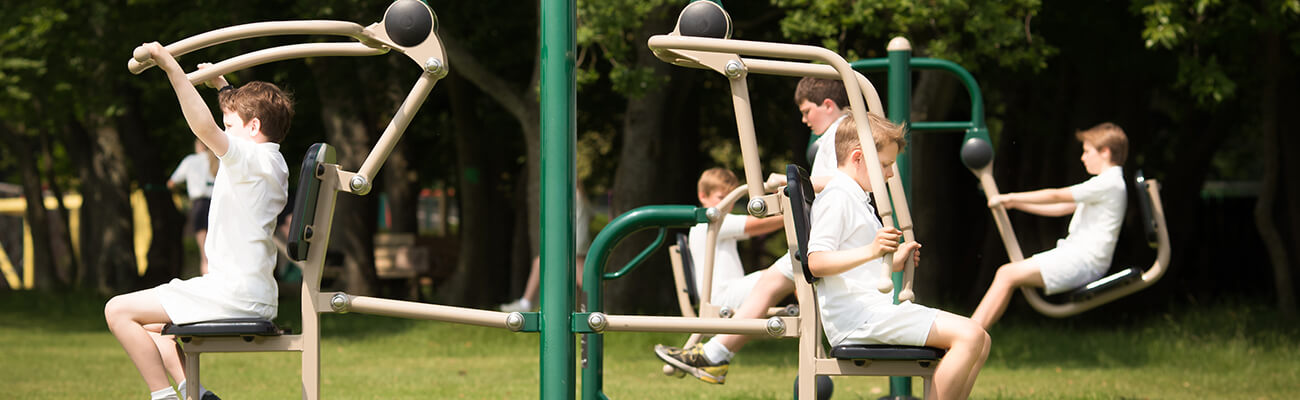
If you’re concerned about activity levels in your school, one solution could be to consider installing outdoor gym equipment. This provides a year round, ready-made facility which the kids won’t have to pay to use, plus an amenity which all children can use throughout the school day, including before and after lessons as well as during lunch and other breaks, regardless of their fitness level or physical ability.
Fresh Air Fitness has been making award-winning outdoor gym equipment for all age groups, including secondary schools since 2007, including SEND students. We can advise pre-installation, including on sources of funding, and we’ll be with you every step of the way from design to installation.
Browse our extensive range of exercise equipment and get in touch with any queries.